Data Security
Data security
According to NIST, “Data security is the process of maintaining the confidentiality, integrity, and availability of an organization’s data in a manner consistent with the organization’s risk strategy.” Companies need to have a plan in case something goes wrong. They should set up security measures beforehand. If something does happen, they must quickly figure it out and handle it. Afterward, they should work on getting things back to normal efficiently.
Forrester defines data discovery and classification as, “The ability to provide visibility into where sensitive data is located; identify what the sensitive data is and why it’s considered sensitive; and tag or label data based on its level of sensitivity. Sensitive data discovery and classification is valuable in that it identifies what you must protect and facilitates the next step of enabling data security controls. Organizations use this visibility into and understanding of data to optimize data use and handling policies and identify appropriate security, privacy, and data governance controls. They may automate remediation capabilities to protect the data and surface insights that inform policy, data handling, and data lifecycle decisions.
The Differences Between Data Privacy and Data Security
It’s vital for your company to fully grasp the implications of the laws designed to safeguard consumer privacy and data. Distinguishing between data security and data privacy is crucial in today’s digital landscape, as both play a key role in mitigating the risks associated with data breaches, information theft, and misuse.
Data has become one of the most valuable assets in the digital age, making its protection essential. Understanding the nuances between data security and data privacy helps your business implement comprehensive measures to safeguard this information effectively.
Privacy laws vary across regions, each imposing regulations to prevent unauthorized access and disclosure of personal information. Failure to comply with these laws can result in severe consequences, including hefty fines, legal actions, and the loss of customer trust.
As a business owner, it’s your responsibility to protect the data entrusted to you—whether it pertains to customers, employees, partners, or other stakeholders. Without proper safeguards, your company is vulnerable to breaches that could lead to significant financial and reputational damage.
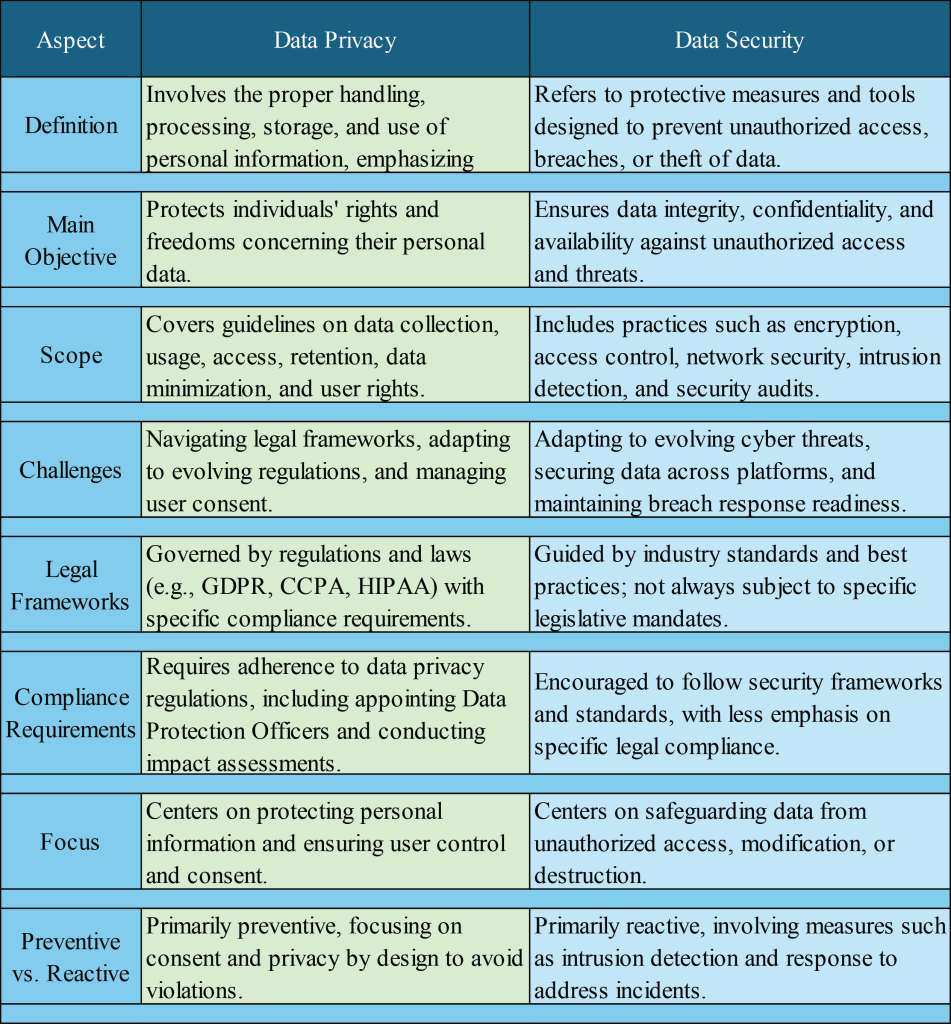
The Comparison Between Data Privacy and Data Security
Data Classification
Organizations today manage vast amounts of information, including sensitive details like employees’ Social Security numbers, making data security and compliance a significant challenge. Data classification is a crucial tool in this effort, as it involves categorizing data based on its sensitivity, associated risks, and regulatory requirements. By sorting and labeling data appropriately, organizations can ensure that only authorized personnel have access to critical information, thereby enhancing security and privacy. Effective data classification simplifies the protection and management of sensitive data, yet many organizations overlook its importance due to a lack of understanding of its benefits.
Basics of Data Classification
This part gives a simple explanation of important ideas about data classification. It also answers basic questions about how data classification fits into an organization’s overall plans for keeping data private, secure, and following the rules.
Why Classify Your Data?
Data security and privacy can be at risk if organizations don’t have a clear understanding of their data, including where it is stored and how it should be protected. Knowing your data means being aware of where all sensitive information is located within a company. According to Forrester, data privacy experts, like Data Privacy Officers, can’t effectively safeguard customer, employee, and company data unless they know:
- What data exists in the company
- Where exactly it is stored
- Its importance and the risks it poses
- The rules that apply to it
- Who can access and use it
Data classification helps by providing a consistent way to identify and label all sensitive information, no matter where it’s stored—be it in networks, on sharing platforms, devices, or cloud storage. By setting clear guidelines for handling and securing each type of data, organizations can easily locate it and apply the necessary protections. This reduces the risk of data exposure, cuts down on unnecessary data, and ensures security efforts are focused where they are needed most. Thus, data classification makes a company’s data privacy and security programs more efficient and effective.
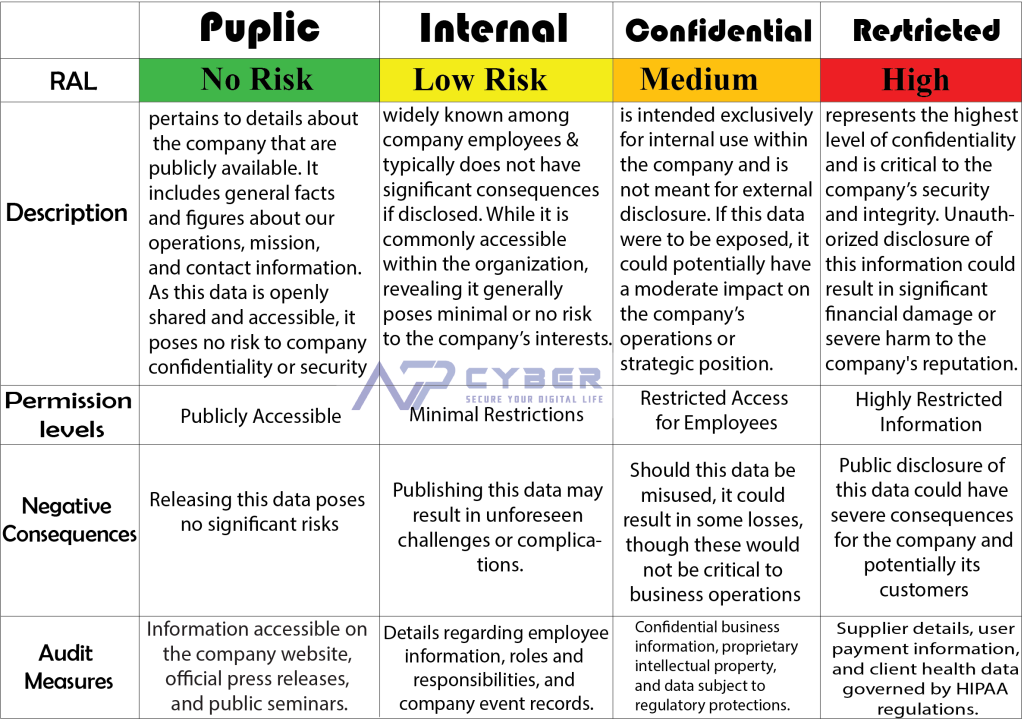
Creating a Data Classification Matrix
To establish an effective data classification matrix, select a template that aligns with your specific needs. For instance, one common example includes four classification levels: Public, Internal, Confidential, and Restricted. This matrix helps categorize data based on its sensitivity and required level of protection.